

You brush. You floss when you remember. You glance in the bathroom mirror and think, looks fine. Then you sit down for a dental exam and your dentist starts talking about things you have never seen, never felt, and never would have noticed on your own.
That is not a scare tactic. It is just how teeth work. Most of what dentists look for during an exam is happening in places a mirror cannot reach, and often before anything hurts. At Granville Smiles, that quiet look is the whole point of a visit. We would rather catch a small change on a Tuesday morning than wait until it becomes a problem that interrupts your life.
A dental exam looks for early decay, gum pockets, cracks, bite changes, bone changes, and oral lesions that you usually cannot see or feel at home. Those findings are often small, painless, and easy to treat when they are found early.
Why a mirror and a toothbrush are not enough
Your bathroom mirror shows the front of your smile. It does not show the grooves on the chewing surfaces, the tight spaces between teeth, or the gumline tucked under the lip. It definitely does not show the bone that holds your teeth in place.
Decay and gum changes also tend to stay quiet. A tooth can be softening from the inside for months before it twinges. Gums can pull away from a tooth a little at a time without bleeding enough to worry you. That is why a regular dental exam is less about judging your brushing and more about seeing what daily life hides.
Dr. Radhika Patel built Granville Smiles around that kind of attention. She grew up in a small Ohio town, chose Granville as the place to raise her family, and treats exams as a conversation with a neighbor, not a checklist rushed between appointments. You should leave knowing what we saw, why it matters, and what, if anything, comes next.
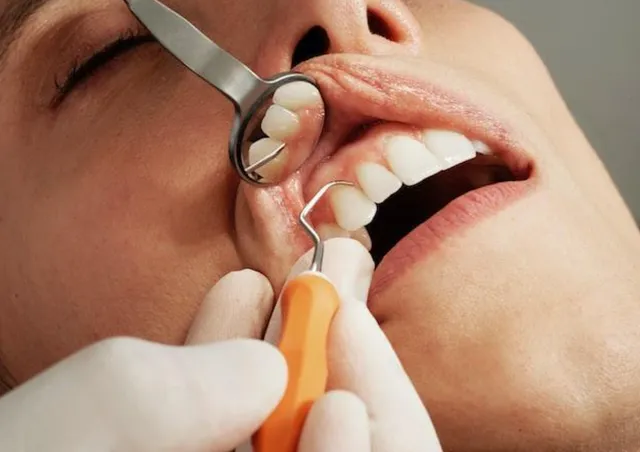
What dentists look for during an exam
A dental exam is a careful look at your teeth, gums, bite, and the soft tissues of your mouth, often with digital X-rays and a simple gum measurement. It is how we find problems before they hurt.
At Granville Smiles, a visit usually unfolds like this. We start by asking how you have been feeling, not just in your mouth, but in general. Medications, a new habit of clenching, a dry mouth, a sore that will not quit: those details change what we look for. Then we look, feel, and measure. If we need a clearer picture, we take digital X-rays. After that, we sit with you and talk through what we found, in plain language, with time for your questions.
Nothing about that should feel mysterious. If we are poking, measuring, or pausing on one tooth, you can always ask what we are seeing. We would rather explain it than leave you guessing.
Early decay you cannot see in the mirror
Early tooth decay often starts between teeth or in the tiny grooves of a molar, where a toothbrush and a mirror both miss it. It can look like a faint shadow on an X-ray long before you feel a hole.
Think of enamel as a hard shell. Acid from food and bacteria can soften a spot under that shell while the outside still looks smooth and white. By the time you notice a dark spot or a catch with your tongue, the decay has usually been there a while.
During a dental exam, we look for:
- Soft or sticky spots that a metal explorer catches
- Color changes along the edges of old fillings
- Shadows between teeth on digital X-rays
- Grooves on back teeth that have started to stain and soften
Caught early, some of these spots can be watched, cleaned more carefully, or treated with fluoride. Wait until they hurt, and you are often looking at a larger filling, or a crown. That is the difference a dental exam is built to make.
The National Institute of Dental and Craniofacial Research describes tooth decay as one of the most common health problems, and notes that it can be stopped or reversed in the early stages. That window is exactly what we are trying to use.
Gum pockets and the bone underneath
Healthy gums hug each tooth like a snug collar. When that collar loosens, a small space opens. We call that space a pocket. You cannot see it in the mirror, and you often cannot feel it either.
During a dental exam, we gently measure those spaces with a thin probe. A reading of about 1 to 3 millimeters is usually a healthy fit. Deeper numbers mean plaque and bacteria have room to sit below the gumline, where brushing cannot reach. Over time, that irritation can affect the bone that holds the tooth.
Bone changes show up on X-rays, not in the bathroom. A tooth can feel solid while the support around it is slowly thinning. Bleeding when you floss, a tooth that looks a little longer, or a bad taste that comes and goes are clues. Plenty of people have none of those clues at all.
This is one reason we do not treat a cleaning as “just a cleaning.” The exam tells us whether your gums need a routine polish or a more focused plan. The National Institute of Dental and Craniofacial Research’s overview of gum disease is a clear, plain-language look at how this starts and why early care matters.
Cracks that hide until they don’t
A cracked tooth does not always announce itself. Some cracks are hairline. They catch light only at a certain angle, or they hurt only when you bite a certain way and then stop the moment you let go. That on-and-off pain is a classic story we hear in the chair.
We look for cracks with a bright light, sometimes a small dye, and by asking you to bite on a plastic tool that isolates one cusp at a time. Old metal fillings, a habit of chewing ice, and nighttime clenching all raise the odds. Granville winters do not help if you are someone who grinds when the schedule gets full.
A small crack can often be protected with a crown before it splits the tooth. A crack that runs below the gum is a different conversation. Finding it during a dental exam, while the tooth is still comfortable most days, is a much kinder time to talk about it.
Bite issues you have learned to live with
Your bite is how your teeth meet when you close, chew, and rest. You can get used to a bite that is slightly off. Your jaw, your teeth, and the muscles along your temples are less forgiving.
During an exam we watch how your teeth come together, look for flat worn spots, and ask about morning headaches, jaw clicks, or teeth that feel tender when you wake up. A filling that sits a hair too high can throw one side off. So can a missing tooth that lets the neighbors tip.
Bite issues are not always dramatic. Sometimes the fix is a small adjustment. Sometimes it is a nightguard, Invisalign, or replacing a tooth so the others stop doing extra work. The point of the exam is to notice the pattern before a tooth chips or a jaw stays sore for months.
Oral lesions and the screening you may not notice
Part of every dental exam at Granville Smiles is a look at the tissues you do not think of as “dental” at all: the lips, cheeks, tongue, floor of the mouth, palate, and the sides of the neck. We are looking for spots that are red, white, thickened, or slow to heal.
Most of what we find is harmless. A cheek bite. A canker sore. Irritation from a sharp edge. We still want to see it, because a spot that lingers more than two weeks deserves a second look. The American Dental Association’s oral cancer overview explains why a routine visit is a natural time for this screening, and what kinds of changes should be checked.
You will not see these areas well at home. The underside of the tongue and the floor of the mouth are easy to skip, and they are exactly the places we do not skip. If something needs a specialist, we say so plainly and help you get there. If it needs watching, we put a note in your chart and look again next time. Either way, you are not left wondering.
What an X-ray shows that your eyes cannot
Digital X-rays are not an add-on we do out of habit. They show the spaces between teeth, the tips of the roots, the bone level, and infections that have not reached the surface yet.
A tooth can look perfect and still have decay starting where two teeth touch. A root can have a small infection at the tip with no swelling you can see. Wisdom teeth, extra roots, and old infections from years ago all live in that picture.
We take X-rays when they will actually change what we know, not on a timer that ignores your history. If you want to see the image, ask. We are happy to point at the screen and tell you what we are looking at. That is part of being more than a number in a schedule.
A simple map of the dental exam
Here is the short version of what we are checking, and why you usually cannot do it yourself.
- Early decay: Soft spots and X-ray shadows between teeth, often before pain.
- Gum pockets: Measured spaces under the gumline that trap bacteria.
- Bone changes: Support around the teeth, visible on X-rays, not in the mirror.
- Cracks: Hairline lines that hurt only when you bite a certain way.
- Bite issues: Worn spots, jaw strain, and teeth meeting unevenly.
- Oral lesions: Red, white, or slow-healing spots on cheeks, tongue, and lips.
- Old dental work: Fillings and crowns with edges that have opened up.
- Oral cancer screening: A feel and look at tissues and neck nodes at each exam.
What you might feel, and what it does not mean
People sometimes leave an exam worried that a measurement or a pause means something is badly wrong. Most of the time, it means we are being thorough.
A gum measurement is uncomfortable for a second, not a punishment for skipping floss. A sticky spot is not automatically a filling today. A white patch is not automatically serious. We will tell you the difference between “watch this,” “treat this soon,” and “this needs attention now.”
If you have been avoiding the dentist because you expect a lecture, you can set that down. Our job is compassionate care and a clear plan, not a scorecard. You deserve to understand your own mouth.
How often should you have a dental exam?
Most adults do well with a dental exam and cleaning about every six months. Some people need to come more often, especially if gums are tender, dry mouth is an issue, or decay has been a pattern.
Kids benefit from the same rhythm, with an eye on growth, sealants, and how adult teeth are coming in. If something changes between visits, a sore that lasts, a tooth that zings, a crown that feels loose, do not wait for the calendar. Call. We would rather see you early.
What you can do at home between exams
Home care still matters. It just has a different job than the exam. You are keeping the surfaces clean. We are checking the places you cannot reach or see.
A few habits make our job, and your teeth, easier:
- Brush twice a day with a fluoride toothpaste, including the gumline
- Clean between teeth daily, with floss or a water flosser
- Notice sores, chips, or sensitivity and mention them at your visit
- Skip using your teeth as tools, and ease up on ice chewing
- Tell us about new medications, since many of them dry the mouth
None of that replaces a dental exam. It makes the exam more likely to be a short, reassuring visit.
Frequently asked questions
What is a dentist looking for during an exam?
A dentist looks for early decay, gum pockets, cracks, bite problems, bone changes, worn dental work, and unusual spots on the soft tissues. Most of these do not hurt and do not show up in a bathroom mirror.
Can I see a cavity at home?
Sometimes, once it is large. Early decay usually hides between teeth or in grooves and shows up first on an X-ray or with a dental instrument. Waiting to see a hole means waiting too long.
What is a gum pocket?
A gum pocket is a space between the tooth and the gum. Healthy pockets are shallow, about 1 to 3 millimeters. Deeper pockets can hold bacteria and, over time, affect the bone around the tooth.
Does a dental exam include an oral cancer screening?
Yes. At Granville Smiles, an oral cancer screening is part of the exam. We look at and feel the lips, cheeks, tongue, floor of the mouth, palate, and neck for changes that should be watched or referred.
Why doesn’t my tooth hurt if something is wrong?
Enamel has no nerves. Decay, early gum disease, and many cracks can progress quietly until they reach deeper tissue. Pain is a late signal, not an early one.
How long does a dental exam take?
Plan on a visit that does not feel rushed. The look itself is focused, and we leave time to explain what we found and answer questions. That unhurried conversation is part of the care, not an extra.
The visit is where the quiet things get a voice
You cannot see early decay between your teeth. You cannot measure a gum pocket with a toothbrush. You cannot spot a hairline crack or a small bone change from the hallway mirror. That is what dentists look for during an exam, and it is why the visit still matters even when your smile looks fine.
If you are in Granville or nearby and it has been a while, come in. We will look carefully, tell you the truth in plain words, and build a plan that fits your life. That is the relationship we want with you: long, honest, and unhurried.
Ready when you are. Learn about preventive dentistry at Granville Smiles, or call us at 740-587-3001 to schedule a dental exam with Dr. Patel.