

Most dental problems don’t announce themselves dramatically at first. A little sensitivity here, a twinge when you bite down there. It’s easy to tell yourself you’ll get it checked “at your next appointment” or that it’ll probably go away on its own.
It rarely does.
Dental problems are almost uniquely progressive. Unlike a sore muscle that heals with rest, a cavity doesn’t fill itself back in. Gum disease doesn’t reverse without treatment. A crack in a tooth doesn’t fuse back together overnight. And the longer you wait, the more complex and costly the treatment becomes.
At Granville Smiles, we see this regularly. Patients come in with what started as a small, easily treatable issue that has grown into something far more involved, often because life got busy and the problem didn’t hurt badly enough to demand attention. That’s one of the cruelest things about oral health: the pain often doesn’t arrive until the damage is already serious. Practicing good oral hygiene—such as daily brushing with fluoride toothpaste, daily flossing, and limiting sugary foods—along with prioritizing oral health care, is essential for preventing dental problems like cavities, gum disease, and bad breath.
Here’s a straightforward look at the dental problems that are most likely to get significantly worse if you delay care, and what’s actually happening inside your mouth while you wait. Regular dental appointments and checkups, typically every six months, are also crucial for professional cleanings to remove tartar and for early detection of oral health issues.
Cavities: The Classic “I’ll Deal With It Later” Problem
Tooth decay is the most common dental problem in the world, and it’s also one of the most misunderstood. Dental caries, also known as cavities, occur when bacteria in the mouth produce acids that erode the enamel, leading to the formation of holes or cavities in the teeth. People assume that if a cavity isn’t hurting, it isn’t serious. That assumption leads to a lot of unnecessary root canals and extractions.
Here’s how a cavity actually progresses when left untreated:
- Stage 1 (Enamel Damage): Decay begins on the outer surface of the tooth. At this stage, there’s no pain, and it may even be reversible with fluoride treatments and improved oral hygiene. A small filling, if needed, takes minutes and costs very little. Plaque forms on the tooth surface when bacteria feed on food particles and free sugars left in the mouth, converting them into acids that start to break down enamel.
- Stage 2 (Dentin Involvement): Once decay reaches the dentin, the softer layer beneath enamel, you’ll likely start noticing sensitivity to hot, cold, and sweet foods. The damage is accelerating now because dentin decays faster than enamel. A filling is still the fix, but it’s larger.
- Stage 3 (Pulp Infection): If the decay reaches the pulp, the inner chamber containing the nerves and blood vessels, you’re now looking at a root canal. Pain can be sharp, persistent, and difficult to ignore. Treatment is significantly more involved and more expensive.
- Stage 4 (Abscess or Tooth Loss): Left long enough, the infected pulp can cause an abscess, severe bone loss, and ultimately require extraction of the tooth entirely.
Dental caries result from plaque forming on the surface of a tooth and converting free sugars in foods and drinks into acids that destroy the tooth over time. Preventing dental caries involves brushing your teeth twice daily with fluoride toothpaste, flossing to remove trapped food particles, and reducing the intake of free sugars.
The timeline from Stage 1 to Stage 3 can vary widely, but research suggests untreated cavities can reach the pulp within a year or more depending on the individual. The catch is you often don’t feel it happening until Stage 3.
What this means for you: A cavity caught early is a simple, affordable fix. The same cavity left alone can become a root canal, a crown, or a missing tooth. Regular exams exist precisely to catch decay before it has a chance to progress. Tooth decay, gum disease, and tooth sensitivity are the most common dental problems people face.

Gum Disease: The Silent One That Sneaks Up on You
Gum disease (periodontal disease) is the leading cause of tooth loss in adults, and most people don’t realize they have it until it’s already in an advanced stage. That’s because gum disease is largely painless in its early form.
The progression looks like this:
- Gingivitis: The earliest stage. Gums are inflamed, may bleed when you brush or floss, and might look redder than usual. At this stage, the damage is entirely reversible with a professional cleaning and better oral hygiene habits at home.
- Early Periodontitis: Plaque has hardened into tartar below the gum line and bacteria have started forming pockets between your teeth and gums. Tartar forming along the gum line can only be removed by a dentist to prevent further decay and gum disease. The bone that holds your teeth in place is beginning to be affected. You may notice your gums pulling back, persistent bad breath, or new spaces appearing between your teeth.
- Moderate to Severe Periodontitis: The pockets deepen, bone loss accelerates, and teeth can become loose. This severe form, or more severe form, of gum disease is known as advanced periodontitis. At this stage, treatment is far more intensive: deep cleanings, possibly surgical intervention, and long-term management to prevent further destruction.
Maintaining good dental hygiene is essential in preventing gum disease. Incorporating antibacterial mouthwash into your oral care routine helps reduce bacterial colonies in the mouth without drying out oral tissues, and can help prevent and reverse early stages of gum disease by reducing plaque and inflammation.
According to the Mayo Clinic, periodontitis can also strain the immune system and has been linked to broader health concerns including heart disease and diabetes. The connection between your oral health and your overall health is well documented, which makes untreated gum disease a concern that extends well beyond your smile.
What this means for you: Bleeding gums are not normal. They’re an early warning sign. If your gums bleed when you brush, don’t ignore it. Caught at the gingivitis stage, the condition can be fully reversed. Caught later, it becomes something you manage for life.
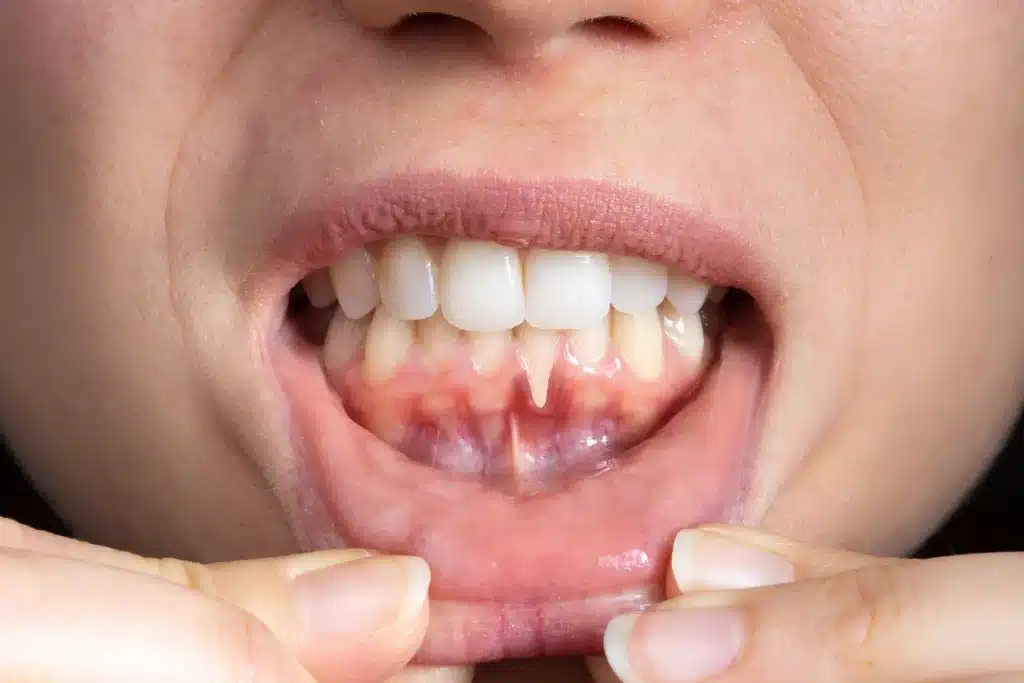
Cracked or Chipped Teeth
A crack or chip in a tooth can feel minor, especially if it doesn’t hurt right away. But teeth don’t heal the way skin does. A crack that exists today will not seal itself. In fact, normal chewing forces can cause it to deepen and spread over time.
Here’s what often happens when a cracked tooth goes untreated:
- Days to weeks: The crack may deepen slightly with normal chewing. Intermittent sharp pain when biting, or sensitivity to temperature changes, may begin or worsen.
- One to two weeks: The risk of bacteria entering the crack and reaching the pulp increases significantly. Early intervention at this stage, often a crown, can seal the tooth and prevent infection.
- Three to four weeks or more: An infection may have set in, requiring a root canal in addition to a crown to save the tooth.
- One to two months: In severe cases, the tooth may have split or the infection may have spread to surrounding tissue, making extraction the only remaining option. Tooth extraction may be necessary if the tooth is too damaged or infected to repair.
Beyond the tooth itself, an untreated crack can throw off your bite as you unconsciously begin favoring the other side of your mouth, which can contribute to jaw muscle tension and strain on surrounding teeth.
What this means for you: A cracked tooth should be evaluated promptly, even if it isn’t causing major pain yet. The earlier it’s caught, the simpler the repair.

Dental Abscesses: A True Dental Emergency
A dental abscess is a pocket of infection that forms inside a tooth or in the gum tissue surrounding the root. Abscesses can develop in various parts of the oral cavity, depending on the location of the infection. It can develop as a result of untreated cavities, cracked teeth, or advanced gum disease. It is not something to wait out.
Symptoms of a dental abscess include a persistent, throbbing toothache; swelling in the face, jaw, or neck; fever; bad taste in the mouth; and a small, pimple-like bump on the gum near the affected tooth.
What makes an abscess particularly serious is that the infection can spread. In rare but documented cases, untreated dental infections have spread to the jaw, neck, and in extreme situations, caused life-threatening airway complications. The bacteria can also enter the bloodstream, affecting the heart and other organs.
An abscess will not go away without treatment. Antibiotics alone won’t resolve it permanently. The source of the infection, the tooth, must be treated through a root canal or extraction.
What this means for you: If you have swelling, fever, or a persistent throbbing pain, don’t wait for your next scheduled appointment. Call your dentist the same day. This is one situation where waiting is genuinely dangerous.

Tooth Sensitivity
Sensitivity to hot, cold, or sweet foods is easy to dismiss. Many people live with it for years, working around it with sensitivity toothpaste and avoiding ice cream. But tooth sensitivity is usually a symptom of something, not a condition in itself. Tooth sensitivity occurs when the enamel wears down or the gums recede, exposing the underlying dentin, which contains tiny tubules that connect to the nerves inside the tooth, causing pain.
It can signal enamel erosion, receding gums exposing the tooth root, early decay, a crack in the tooth, or even the early stages of pulp inflammation. Tooth sensitivity can be triggered by exposure to hot, cold, sweet, or acidic foods and drinks, leading to pain or discomfort. Each of those underlying causes can worsen over time if left unaddressed.
Sensitivity toothpaste can mask the discomfort temporarily, but it doesn’t treat the source. If the underlying cause is progressing, you’ll find the sensitivity increasing despite the toothpaste, and often by the time it becomes severe, the underlying issue has escalated significantly.
What this means for you: Sensitivity that persists for more than a week or two, or that’s getting worse rather than better, deserves a conversation with your dentist. It’s usually diagnosable in a routine exam. Using a soft-bristled toothbrush and avoiding aggressive brushing habits are recommended to prevent tooth sensitivity and enamel wear.

Teeth Grinding (Bruxism)
Many people who grind their teeth don’t even know they do it. Bruxism often happens during sleep, and the first signs are usually a partner mentioning the sound, or waking up with jaw soreness and headaches. A sore jaw is a common symptom, often accompanied by frequent headaches.
Common causes of teeth grinding include stress, anxiety, sleep disorders, and misaligned teeth.
Over time, untreated bruxism causes real, measurable damage:
- Gradual wearing down of tooth enamel, making teeth shorter, flatter, and more sensitive
- Cracking and chipping of teeth, especially back molars
- Increased risk of cavities as enamel thins
- Jaw muscle soreness and fatigue
- Development or worsening of TMJ dysfunction
- Damage to dental restorations like crowns and fillings
A night guard is a relatively simple, cost-effective solution that protects your teeth while the underlying cause is addressed. The cost of a custom night guard is a fraction of what it costs to restore worn-down or cracked teeth years later.
What this means for you: If you grind your teeth and don’t have a night guard, the damage is accumulating every night. This is one of those dental problems that’s completely manageable early and significantly more complex later.

TMJ Dysfunction
The temporomandibular joint (TMJ) connects your jaw to your skull and is responsible for every bite, chew, and word you speak. When this joint is stressed or misaligned, it can cause a range of symptoms: jaw pain or tenderness, a clicking or popping sound when opening and closing the mouth, headaches, ear pain, and difficulty opening the jaw fully.
TMJ dysfunction is often tied to teeth grinding, bite issues, missing teeth, jaw injuries, or malocclusion. Malocclusion can be caused by genetic factors, thumb-sucking during childhood, or injury to the teeth or jaw. It can start subtly and be easy to dismiss as tension headaches or general jaw soreness.
When left untreated, TMJ dysfunction can become chronic and significantly harder to manage. The muscles surrounding the joint can become chronically tight, the joint itself can experience wear, and the pain can spread to the neck and shoulders. In some cases, the jaw can lose range of motion entirely if inflammation and muscle tension go unaddressed long enough.
What this means for you: Jaw clicking, morning headaches, or facial pain without an obvious cause are worth mentioning at your next dental visit. Early management, whether it’s a night guard, bite adjustment, or physical therapy referral, is far simpler than managing a chronic TMJ condition years down the road.

Missing Teeth
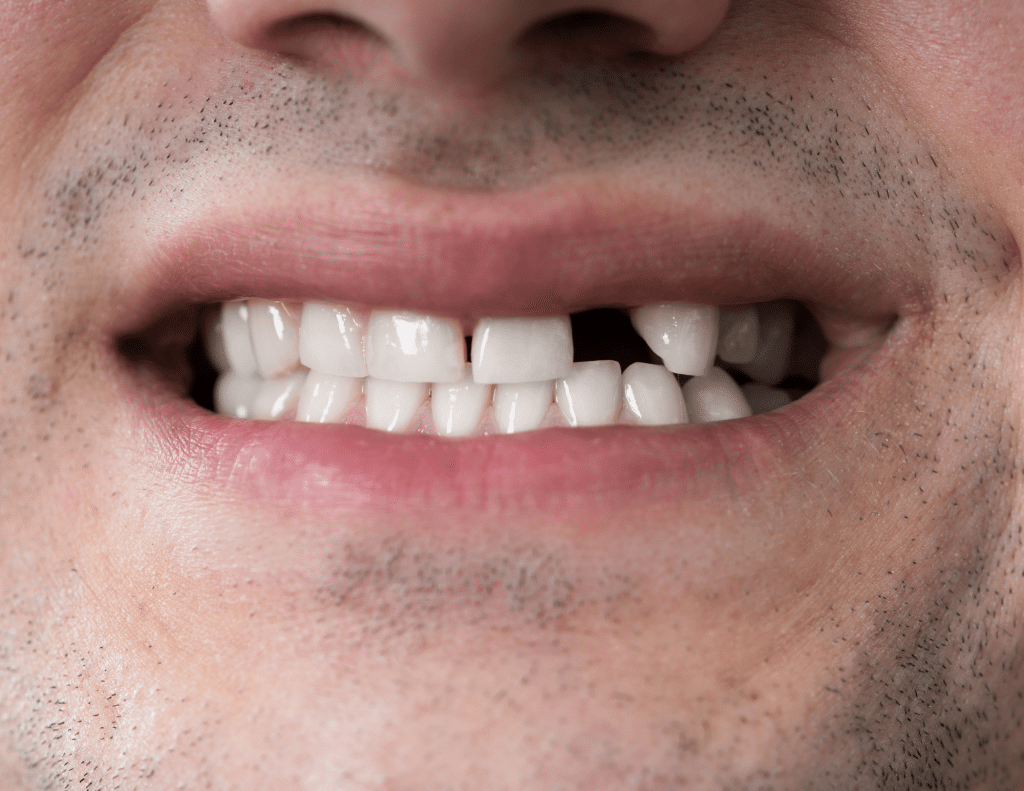
This one surprises people. They assume that once a tooth is already gone, the problem is static. It isn’t. Complete tooth loss (edentulism) often results from oral disease, such as advanced dental caries and periodontal disease, and can have significant psychological and social impacts on individuals.
When a tooth is lost and not replaced, a chain of events begins in the surrounding area:
- Bone resorption: The jawbone in the area of the missing tooth no longer receives the stimulation it needs from chewing. Without that stimulation, the bone begins to shrink and resorb. This process can begin within the first year after tooth loss and accelerates over time.
- Tooth drift: Adjacent teeth lose a neighboring support structure and begin to tilt or shift into the gap. This can affect your bite, create new areas where food traps, and make future tooth replacement more complicated.
- Opposing tooth over-eruption: The tooth above or below the gap may begin to grow toward it in an attempt to find contact, causing its own set of bite and alignment problems.
- Facial changes: Significant bone loss over time can affect the shape of the face, causing the area to appear sunken or prematurely aged.
Options for replacing missing teeth, including dental implants, bridges, and partial dentures, are most straightforward when done sooner rather than later. Once significant bone loss has occurred, implant placement may require bone grafting first, adding time, complexity, and cost.
What this means for you: A missing tooth isn’t just cosmetic. The sooner it’s evaluated for replacement, the simpler the path forward.
Frequently Asked Questions
How long can you leave a cavity untreated before it becomes serious?
It depends on the size of the cavity and the individual. Some cavities progress slowly over months; others can reach the pulp within a year or less. The safest approach is to treat a cavity as soon as it’s identified. Early cavities are quick and inexpensive to fix. Waiting increases the likelihood of needing a root canal or losing the tooth.
Can gum disease be reversed?
In its earliest stage, gingivitis, yes. Gingivitis is fully reversible with a professional cleaning and improved oral hygiene. Once gum disease has progressed to periodontitis, the damage to bone and tissue cannot be undone, though it can be stabilized and managed with regular treatment.
Is it safe to wait a few weeks to see the dentist for a cracked tooth?
Not ideally. A cracked tooth can deepen and become infected within a matter of weeks. If you’re experiencing pain when biting, sensitivity, or any swelling near a cracked tooth, you should seek evaluation sooner rather than later. A tooth that needs only a crown today could need a root canal plus a crown in a few weeks.
What are the signs that a dental problem needs immediate attention?
Call your dentist the same day if you have: swelling in your face, jaw, or neck; a persistent throbbing toothache; fever; difficulty swallowing or breathing; pus near a tooth; or a tooth that has been knocked out or severely broken. These are signs that an infection may be present and should not wait.
Additionally, chronic bad breath that does not improve with regular oral hygiene can be a sign of underlying dental issues such as gum disease or cavities. Factors like certain foods, smoking, and medical conditions can also contribute to bad breath and may indicate the need for a professional dental evaluation.
How often should I get a dental exam to catch problems early?
For most adults, every six months is the standard recommendation. If you notice subtle symptoms or changes in your oral health, it’s important to schedule a dental appointment promptly to address potential issues before they become serious. Some patients with higher risk factors for decay or gum disease benefit from more frequent visits. Regular exams give your dentist the opportunity to catch problems in their earliest, most treatable stages, often before you feel any symptoms at all.
Does delaying dental care actually cost more money in the long run?
Almost always, yes. A filling costs a fraction of a root canal. A root canal costs a fraction of an implant. Preventive care and early treatment are almost universally less expensive than the treatment required once a problem has been ignored for months or years.
Small Problems Don’t Stay Small
If there’s one thing that ties every dental problem on this list together, it’s this: none of them get better on their own. They get quieter sometimes, sure. The pain may come and go. The sensitivity might seem to plateau. But underneath the surface, the progression continues.
The good news is that most dental problems that get worse if you wait are incredibly manageable when caught early. A simple filling. A professional cleaning. A night guard. A crown. These are the kinds of treatments that take an hour or less and prevent years of more complex care down the road.
At Granville Smiles, we believe you deserve more than just a quick exam and a see-you-in-six-months. Dr. Patel and our team take the time to actually explain what’s going on with your oral health, what the options are, and what we’d recommend. Not because we want to upsell you on treatment, but because we genuinely believe that informed patients make better decisions for their long-term health.
If something has been bothering you, or if it’s been longer than you’d like to admit since your last dental visit, we’d love to see you. Early care is almost always the kindest thing you can do for your smile, your wallet, and your overall health.
Ready to get ahead of dental problems before they get ahead of you? Call Granville Smiles in Granville, Ohio or visit granvillesmiles.com to schedule your visit today.