

Spring is one of the most exciting times of the year for athletes of all ages in Granville and across Ohio. Baseball diamonds fill up. Soccer cleats hit the grass. Lacrosse sticks swing. But for every sprint, slide, and swing, there’s a risk most families don’t think twice about: dental and facial injuries. And the single most effective piece of protection against them? A mouthguard.
Mouthguards offer important benefits by preventing dental injuries and reducing the risk of orofacial trauma during sports activities, especially for young athletes. They play a crucial role in enhancing safety and protecting smiles on the field.
April is National Facial Protection Month, a campaign led by dental and medical organizations nationwide to remind athletes, parents, and coaches that protective equipment saves smiles. In spring sports, there is a significant risk of orofacial injury, making safety a top priority for all participants. Dentists are essential in recommending and providing high-quality, customized mouthguards for young athletes to ensure proper fit and reliable protection. At Granville Smiles, we believe protecting your family’s health starts before injury happens. This article covers everything you need to know about mouthguards for spring sports: why they matter, what type is best, and how a custom-fitted mouthguard from your dentist makes all the difference.
The dental community advocates for the use of mouthguards in all sports with a significant risk of orofacial injury. For more information, visit the American Dental Association’s page on mouthguards.

Mouthguards for Spring Sports
National Facial Protection Month
National Facial Protection Month is observed every April to raise awareness about the importance of protective gear, including mouthguards, helmets, face shields, and protective eyewear, in preventing sports-related facial injuries. The campaign is co-sponsored by leading organizations, including the American Association of Oral and Maxillofacial Surgeons (AAOMS), the Academy for Sports Dentistry, and the American Dental Association (ADA).
The American Dental Association recommends mouthguards for high-velocity and contact spring sports to enhance safety during sports activities such as football, hockey, soccer, and wrestling. Wearing a properly fitted mouthguard is a key part of sports equipment that helps absorb impacts and prevent dental injuries, supporting player safety and meeting important safety standards. Learn more at the American Dental Association’s National Facial Protection Month page.
The timing is intentional. April marks the start of the spring sports season across the country — a period when youth athletes return to fields and courts in large numbers, and when injury risk climbs significantly. The goal of the campaign is simple: most sports-related facial injuries are preventable, and awareness is the first step.
The Real Risk: Sports-Related Dental Injuries by the Numbers
The statistics on sports-related dental and facial injuries are striking and make a compelling case for why mouthguards are non-negotiable for spring athletes.
- Athletes without mouthguards are 60 times more likely to suffer dental injuries than those who wear them.
- Mouthguards are estimated to prevent up to 200,000 dental injuries annually in the United States.
- Approximately 12 million youths aged 5–22 suffer sport-related injuries each year, according to the Academy for Sports Dentistry.
- By age 14, 30% of children have experienced at least one dental injury.
- Sports injuries are the leading cause of emergency room visits for children ages 12–17.
- Sports-related dental injuries cost American families up to $1.8 billion annually.
- Despite 99% of parents recognizing the importance of mouthguards, 37% of children do not wear them during organized sports.
Many participants are aware of the benefits of mouthguards, but actual usage remains low. The ADA estimates that mouthguards can reduce the risk of serious dental injuries by up to 93%. For more detailed statistics, see the Academy for Sports Dentistry’s facts and figures.
That gap between awareness and action is exactly what National Facial Protection Month aims to close, and what we at Granville Smiles want to help bridge for our community.
Which Spring Sports Require a Mouthguard?
You might be surprised to learn that mouthguards are not mandated across all spring sports, and that gap in policy is where most injuries occur. Here’s a quick breakdown:
Mouthguards are required in:
- Lacrosse
- Field hockey
Mouthguards are recommended (but not always required) in:
- Baseball/softball
- Soccer
- Track & field (pole vault, shot put, etc.)
- Volleyball
- Tennis
- Wrestling
Even if your child’s sport doesn’t require a mouthguard, we strongly recommend that every child wear a sports mouthguard during practices and games to protect their teeth and mouth from injury.
Sports Where Mouthguards Are Typically Required
- Football
- Lacrosse
- Field hockey
- Ice hockey
- Boxing and martial arts
Spring Sports Where Mouthguards Are Recommended but Not Always Required
- Baseball and softball
- Soccer
- Basketball
- Track and field
- Volleyball
- Tennis
- Gymnastics
In sports like lacrosse and field hockey where mouthguards are mandated, compliance rates exceed 95%. But in sports like soccer and track, where they’re recommended but not required, compliance drops to 30–60%.
Dental trauma doesn’t only happen in contact sports. A stray elbow, an unexpected fall, or a ball to the face can cause serious injury in any athletic setting.
Our recommendation at Granville Smiles is simple: if your child plays any sport, they should wear a mouthguard.
For safety guidelines by sport, see the National Youth Sports Safety Foundation.
What Does a Mouthguard Actually Protect Against?
A well-fitted mouthguard is designed to absorb and redistribute the force of an impact. When worn properly, it protects against:
- Broken or chipped teeth — the most common sports-related dental injury
- Knocked-out teeth (dental avulsion) — a dental emergency that requires immediate care
- Cuts to the lips, tongue, and cheeks caused by contact with teeth. Mouthguards act as a barrier for the lips, tongue, and cheeks, reducing the risk of lacerations and bruising.
- Jaw fractures and TMJ injuries
- Root fractures and tooth displacement
- Concussions — emerging research suggests that custom mouthguards may help reduce concussion risk by absorbing shock transmitted through the jaw to the skull
The protection a mouthguard provides is not limited to teeth alone. It serves as a shock-absorbing buffer between the upper and lower jaw, reducing the transmission of force throughout the entire craniofacial system. Mouthguards must distribute the force of a direct blow across all teeth, providing full coverage protection and helping protect the teeth, jaw, and lips. Mouthguards absorb shock to minimize fracture risks and may help reduce concussion severity. That’s a lot of value packed into a small piece of protective equipment. For more on the science, visit the American Association of Oral and Maxillofacial Surgeons.
The 3 Types of Mouthguards: Which Is Right for Your Athlete?
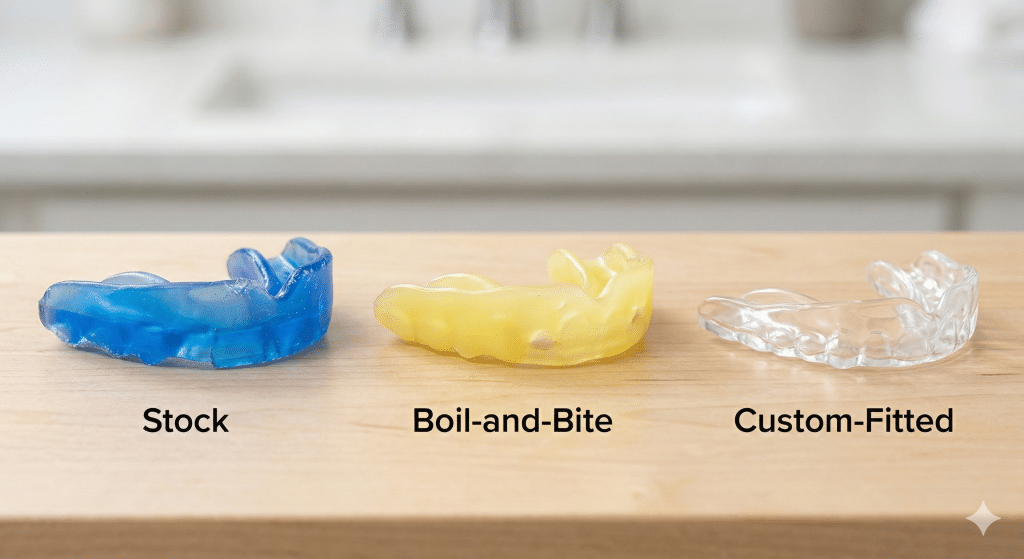
Not all mouthguards are created equal. According to ANSI/ADA Standard No. 99:2001, there are three categories of mouthguards, each offering different styles, comfort levels, adaptability, and safety. The latest designs feature a variety of styles to suit personal preferences and needs, while providing ultimate protection for athletes during spring sports.
Type 1: Stock Mouthguards
Stock mouthguards come pre-formed and ready to wear straight off the shelf. They’re the least expensive option and widely available at pharmacies and sporting goods stores.
The problem: Because they’re one-size-fits-all, they rarely fit well. A poor fit means reduced protection, increased discomfort, and a higher likelihood that your athlete simply won’t wear it. They can also interfere with breathing and speaking during play. Stock mouthguards offer the lowest level of protection and are generally not recommended by dental professionals. For more details, see the ADA’s guidance on stock mouthguards.
Type 2: Boil-and-Bite Mouthguards
Boil-and-bite mouthguards are made from thermoplastic material that softens when placed in hot water, then molded to the teeth when the athlete bites down. They’re more affordable than custom options and are a significant improvement over stock guards.
To ensure proper fit and protection, boil-and-bite mouthguards should always be adapted according to the manufacturer’s instructions. Some athletes prefer the convenience of no-boil mouthguards, such as Speed and Oxygen styles, which do not require heating or boiling and can be used right out of the package. The Extreme Impact Boil Bite mouthguard is designed to fit your teeth perfectly, offering superior breathability and shock absorption during play.
The limitation: While boil-and-bite guards provide a better fit than stock options, the DIY molding process is imprecise. Over time, they can warp, become loose, and degrade faster than custom guards, reducing their effectiveness and comfort. They’re a reasonable temporary option but fall short of optimal protection for regular athletes.
Type 3: Custom-Fitted Mouthguards
Custom-fitted mouthguards are fabricated by a dental professional using precise impressions of the patient’s teeth. Custom mouthguards are considered the most protective option but are also the most expensive and require dental visits for fitting. The result is a mouthguard that fits exactly to the individual’s dental anatomy — no adjustments, no slipping, no discomfort. A custom fit is crucial for enhanced comfort and security, ensuring the mouthguard stays in place during intense activity. Custom-fit mouthguards also enhance comfort, breathing, and performance, making them ideal for athletes seeking both protection and improved athletic performance.
Custom mouthguards offer:
- Superior fit and retention during play
- The highest level of impact protection available
- Greater comfort — athletes are more likely to actually wear them
- Proper thickness distribution across high-impact areas
- Durability that outlasts boil-and-bite alternatives
- Compatibility with braces and other orthodontic appliances
Research published in Frontiers in Medicine confirms that custom mouthguards offer superior fit, protection, and comfort compared to all other types, and that proper fit is the single most important factor in injury prevention effectiveness.
Why Custom Mouthguards Are Worth It
We understand the appeal of picking up a $20 boil-and-bite guard at the sporting goods store. It’s convenient, and it feels like a responsible choice. But when you weigh the cost of a custom mouthguard against the potential cost of a dental emergency, the math changes quickly.
A custom mouthguard provides the right fit, which not only maximizes protection but also enhances an athlete’s confidence on the field. Properly fitted mouthguards allow for easier breathing and reduced muscle tension, helping to improve focus and stamina during play.
A single knocked-out permanent tooth, if not re-implanted quickly and successfully, can require a dental implant or bridge. That’s a restorative procedure that can cost thousands of dollars and require multiple visits. A broken tooth requiring a crown, root canal, or extraction carries a similar cost burden, not to mention the physical and emotional toll on your child.
A custom mouthguard from Granville Smiles is a proactive investment in a healthy, confident smile, one that protects not just teeth but years of dental work, orthodontic progress, and peace of mind.
At our practice, Dr. Patel takes dental impressions to create a mouthguard that fits precisely and comfortably, so your athlete actually wears it at every game and practice.
Mouthguards and Orthodontic Treatment: What You Need to Know
If your child is currently in orthodontic treatment — braces, aligners, or other appliances — a mouthguard is even more important, not less.
Full-coverage protection is especially important for athletes with orthodontic appliances, as it safeguards both upper and lower teeth and helps prevent injuries to the mouth and braces during sports activities. Battle mouthguards are designed to work safely and comfortably with orthodontics, providing a secure fit and strong protection. For more information on mouthguards for orthodontic patients, visit the Academy for Sports Dentistry.
Many parents mistakenly believe that braces make mouthguards unnecessary or too difficult to fit. In reality, the opposite is true. A blow to the mouth while wearing braces can cause the brackets or wires to cut into the soft tissue of the cheeks, lips, and gums, compounding the pain with lacerations and appliance damage.
Standard boil-and-bite mouthguards often don’t accommodate orthodontic hardware properly and can even interfere with tooth movement. A custom-fitted mouthguard designed for orthodontic patients, which Dr. Patel can provide, is molded to protect both the teeth and the orthodontic appliances, offering comprehensive coverage and comfort.
How to Care for a Mouthguard
A mouthguard is only as good as the care it receives. Here’s how to keep it clean, effective, and long-lasting:
- Rinse before and after every use with cold water or an antimicrobial mouthwash.
- Clean with a toothbrush and mild soap — avoid toothpaste, which can be abrasive.
- Store in a ventilated case between uses to prevent bacterial growth.
- Keep away from heat — never leave it in a hot car or rinse with hot water, as heat warps the material.
- Check for wear and damage regularly — a mouthguard that has thinned, cracked, or lost its fit should be replaced immediately.
- Bring it to dental appointments so Dr. Patel can inspect its condition and fit.
- Replace when needed — custom mouthguards typically last one to three seasons with proper care.
For more detailed care instructions, see the American Dental Association’s mouthguard care tips.
Frequently Asked Questions
Do mouthguards really prevent dental injuries?
Yes. Research indicates that mouthguard use reduces the risk of dental injury by approximately 98% in contact sports. Athletes without mouthguards are 60 times more likely to sustain dental trauma. Mouthguards are estimated to prevent up to 200,000 sports-related dental injuries in the U.S. each year.
What sports require a mouthguard?
Mouthguards are mandated in sports like football, lacrosse, field hockey, ice hockey, and boxing. However, dental professionals recommend mouthguards for all sports, including baseball, soccer, basketball, and gymnastics — any activity where contact or falls are possible.
What is the best type of mouthguard for sports?
Custom-fitted mouthguards made by a dental professional offer the highest level of protection, comfort, and durability. They outperform both stock and boil-and-bite options because they are precisely molded to the individual’s teeth, ensuring a secure fit and optimal shock absorption.
Can my child wear a mouthguard with braces?
Absolutely. In fact, mouthguards are especially important for athletes with braces. A custom mouthguard can be designed to fit over orthodontic appliances, protecting both the teeth and the brackets and wires from impact. Standard store-bought guards are not ideal for braces — ask your dentist for a custom orthodontic mouthguard.
How often should a mouthguard be replaced?
Custom mouthguards typically last one to three seasons with proper care. They should be replaced sooner if they show signs of wear, thinning, cracking, or no longer fit snugly. Growing children and adolescents may need replacements more frequently as their dental anatomy changes.
How do I get a custom mouthguard at Granville Smiles?
It starts with a simple appointment. Dr. Patel will take precise impressions of your teeth, which are used to fabricate a mouthguard tailored to your exact dental anatomy. The result is a comfortable, durable, and highly protective device ready before your season begins. Contact us at granvillesmiles.comor call our office to schedule.
Protect Your Smile This Spring Season
At Granville Smiles, we’re more than just your dental office — we’re your neighbors, and we care deeply about the health and well-being of our community. Every spring, we see families investing in cleats, gloves, helmets, and gear. A mouthguard deserves a place on that list — and a custom-fitted one deserves a spot at the top of it.
This National Facial Protection Month, we’re encouraging every athlete in the Granville, Ohio area to make the call. Whether your child is stepping onto a baseball diamond for the first time or heading into a competitive lacrosse season, a mouthguard is the simplest, most effective thing you can do to protect their smile.
Contact Granville Smiles today to schedule an appointment with Dr. Patel. We’ll take care of the fit — and the rest of the season, you can focus on the game.